Blogs
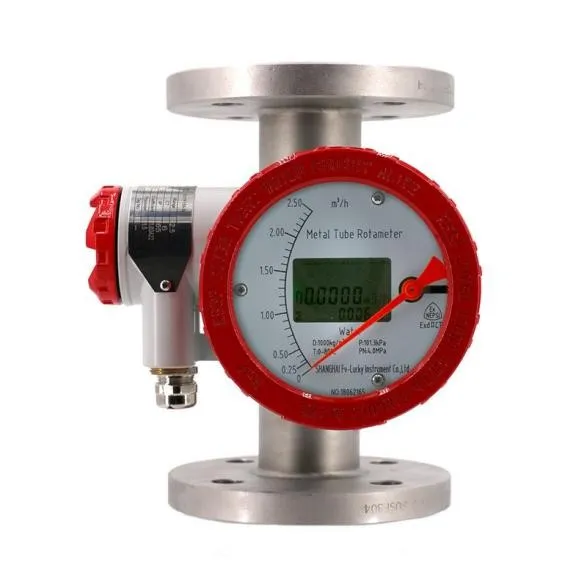
Metal Tube Float FlowMeter: Working Principle, Benefits, and Selection Guide
In industrial process control, accuracy, durability, and reliability are paramount. Whether you are handling high-pressure steam, corrosive chemicals, or delicate gases, knowing your precise flow rate keeps your operations safe and efficient.
Enter the Metal Tube Float Flow Meter (commonly known as a Metal Tube Rotameter)—a time-tested, highly robust solution engineered to excel where standard glass flow meters fall short.
In this guide, we will explore how metal tube float flow meters work, their key advantages, and how to select the right one for your application.
What is a Metal Tube Float Flow Meter?
A Metal Tube Float Flow Meter is an inline instrument designed to measure the volume flow rate of liquids, gases, and steam in a closed pipeline.
Unlike traditional glass rotameters, which feature a transparent tube, metal tube flow meters utilize a heavy-duty metallic body—typically manufactured from 316L Stainless Steel, Hastelloy, or lined with PTFE. Because the internal float cannot be seen directly through the metal wall, the float’s position is transmitted to an external indicator via a magnetic coupling system.
How Does It Work?
The operating principle relies on the Variable Area Principle:
1. Fluid Entry: The fluid enters from the bottom of a vertically mounted, tapered metal tube and flows upward.
2. Float Movement: As the fluid flows, it exerts dynamic pressure on an internal float, lifting it upward.
3. Equilibrium: The float stops rising when the upward force (drag + buoyancy) equals the downward force (gravity). The open area between the float and the tapered tube wall increases as the float moves up.
4. Magnetic Coupling: A permanent magnet inside the float transmits its position to a non-contact magnetic sensor on the outside indicator dial.
5. Flow Indication: The indicator displays the real-time flow rate mechanically (pointer) or digitally (4-20mA signal, HART, Modbus).
Key Advantages of Metal Tube Float Flow Meters
Why do process engineers around the world rely on metal tube float flow meters? Here are the top benefits:
Exceptional Durability & Safety: Designed for extreme operational environments, these meters easily handle high pressures (up to 40 MPa or more) and high temperatures (up to 400°C). The all-metal design prevents catastrophic tube bursts, making it ideal for hazardous media.
High Corrosion Resistance: For aggressive fluids like acids, alkalis, or saline solutions, metal tube flow meters can be lined with PTFE/PFA or crafted from special alloys like Hastelloy C-276 or Titanium.
No Power Supply Required (Local Pointer): The pure mechanical/magnetic coupling design allows for local flow indication without an external power source. This makes it an excellent choice for remote areas or explosion-proof zones.
Smart Transmitter Options: Modern metal tube float flow meters can be equipped with advanced electronic transmitters offering 4–20mA HART output, pulse/totalizer functions, limit switch alarms (high/low flow alarms), or Profibus-PA/Modbus communications.
Low Pressure Loss & Broad Application: Featuring a simple structural design with minimal moving parts, these meters offer reliable, long-term performance with low maintenance and minimal pressure drop.
Typical Applications
Metal tube float flow meters are widely used across diverse industries, including:
Chemical & Petrochemical: Dosing systems, aggressive chemical monitoring, and refining processes. Oil & Gas: High-pressure oil lines, gas injection, and flare gas monitoring. Power & Utilities: Boiler feed water, high-temperature steam measurement, and cooling water circuits. Pharmaceutical & Food Industry: Hygienic process fluid monitoring (with polished sanitary fittings). Water & Wastewater Treatment: Chemical additive dosing and aeration control.
How to Select the Right Metal Tube Float Flow Meter
When specifying a flow meter for your system, consider the following key parameters:
Fluid Type: Liquid, gas, or steam.
Operating Pressure & Temperature: Maximum and standard working conditions.
Flow Range & Viscosity: Minimum and maximum expected flow rates and fluid viscosity.
Material Compatibility: Stainless steel 316L, Hastelloy, or PTFE lining.
Output Requirements: Local indication only, or 4-20mA HART output with alarms.
Installation Direction: Vertical (standard, bottom-to-top) or horizontal options.
Partner with Us for Your Flow Measurement Solutions
Finding the right flow meter doesn't have to be complicated. Our team of application engineers is ready to help you select, customize, and install the perfect flow measurement solution tailored to your operational needs.
Contact Our Technical Experts Today or Explore Our Product Catalog to find out more!